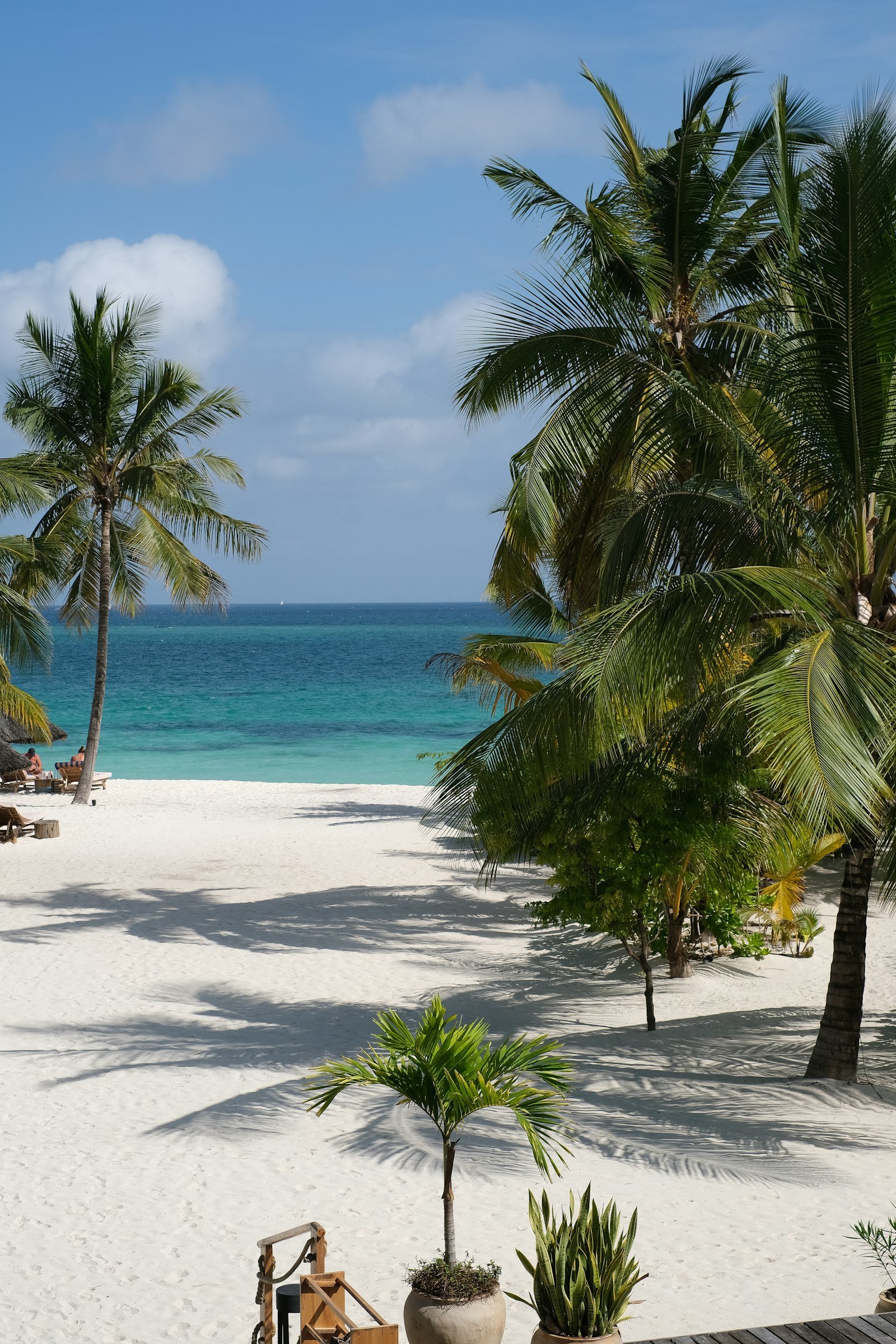
Pemba’s coastline runs to more than 200 km and the island has no mass-market beach tourism. The northern coast has genuine wilderness beaches backed by primary forest. The west coast has the calmest conditions and the clearest water inside the fringing reef. The east coast faces the open ocean and gets a swell, which makes it good for watching dhows sail past but less reliable for swimming.
This guide covers the best named beaches and how to reach each one from Pemba’s main hubs at Chake Chake and Wete.
Vumawimbi Beach
Vumawimbi is consistently rated one of the best beaches in Tanzania’s island system. It sits on the northeast coast, facing the open Indian Ocean, backed by dense coastal forest that has remained largely untouched. The sand is fine and white, the water is clear to the reef edge, and on most days there are no other visitors.
It is also not easy to reach without a vehicle. From Wete town, take the road north toward Tumbe, then east through the forest toward the coast. The last section requires a 4WD or a motorbike - the track floods after heavy rain. Allow 1.5–2 hours from Wete one way.
Practical details:
- No facilities - bring food, water, and sun protection
- Best visited June–October when the northeast face is calm
- Snorkelling on the outer reef edge: bring your own equipment
- Distance from Chake Chake: approximately 38 km via Wete
The beach is completely undeveloped. No chairs, no boat hire, no food sellers. The forest behind the beach has vervet monkeys and red-legged sun squirrels if you walk the edge track for 20 minutes.
Wambaa Beach
Wambaa is on the west coast, 12 km south of Wete and about 20 km north of Chake Chake, near the village of Wambaa. It is one of the most accessible of Pemba’s quiet beaches - a tarmac road runs within 500 metres of the shore, and shared taxis pass the junction on the main Wete–Chake Chake road.
The beach is used by local fishing communities in the morning; by midday it quietens. The fringing reef here is close to shore and easily reached at high tide for snorkelling. Coral coverage is good - better than most of Pemba’s west-coast beaches, which tend to have reef at a greater distance.
Practical details:
- Junction is on the main north–south road, TZS 3,000–4,000 from Chake Chake by shared taxi
- Walk 500 m east from the road to the beach
- Morning: fishing activity, dhow traffic. Afternoon: quiet
- Snorkelling: bring your own gear; the reef is accessible at mid-to-high tide
- Nearest accommodation: Chake Chake guesthouses (20 km) or Manta Resort (approximately 30 km north)
Search hotels in Pemba Island on Booking.com
Ras Mkumbuu
Ras Mkumbuu is a long, narrow peninsula on the southwest coast of Pemba, projecting into the channel for several kilometres. It’s better known for its 9th-century Swahili ruins - one of the oldest recorded settlements in East Africa - than as a conventional beach destination, but the beaches on the western face of the peninsula are good and almost entirely unvisited.
Access is by boat from Chake Chake town - a 30–40 minute dhow or motorised boat crossing, which can be arranged through most Chake Chake guesthouses for approximately TZS 40,000–60,000 (about USD 15–22) for the boat. Alternatively, a local fisherman will usually agree to take a small group on a day trip.
What to see at Ras Mkumbuu:
- The ruined mosque and pillar tombs of the Swahili settlement (approximately 9th–15th century)
- Calm, shallow swimming on the lagoon side of the peninsula
- Mangrove forest at the base of the peninsula, accessible by canoe
- Excellent birdwatching: Pemba green pigeon, Pemba scops owl, and Fischer’s turaco are resident in the forest interior
Bring food and water, confirm return timing with your boat captain, and wear good shoes for walking the ruins.
Kojani Island Beach
Kojani is a small island 5 km north of Wete, connected to the Pemba mainland at low tide by a shallow sandbar. The beaches on the island’s ocean-facing eastern side are good for swimming and are almost never visited by tourists. Local children swim here after school.
The most straightforward access is by outrigger canoe from Wete harbour - any fisherman at the harbour will arrange a crossing for approximately TZS 5,000–10,000 per person. At extreme low tide, it is possible to walk the sandbar, but this requires local knowledge of the tidal patterns.
Tumbe Beach
Tumbe is a large fishing village on the north coast and the main fish market for the island - early morning (05:00–08:00) sees dhows unloading overnight catches and an active trading scene. The beach north of the village is long, clean, and often completely empty by 09:00.
This is not a snorkelling beach - the water is shallower here and the seabed is largely sand. It is best visited for the morning market and for watching the dhow traffic, then combined with the drive south to Vumawimbi if you have a vehicle for the day.
Getting to Tumbe: Shared taxi from Wete market for TZS 2,500–4,000. Journey about 45 minutes. Tumbe is also a possible stopover on the road to Vumawimbi.
Getting Around Pemba
Pemba’s road network is limited outside the main Chake Chake–Wete corridor. Options:
- Shared taxis (daladala): Cover all main routes. TZS 2,000–6,000 per journey depending on distance. Unpredictable schedules.
- Private taxi (Chake Chake): Approximately USD 30–50 per day. Ask your guesthouse to arrange.
- Boda-boda (motorbike taxi): Fastest option for short distances and accessible tracks. Agree the price in advance. TZS 3,000–10,000 for short journeys, more for full-day hire.
- Lodge transfers: All lodge accommodation on Pemba arranges transfers from the airport and can arrange beach excursions - easiest but most expensive.
Browse Tanzania island tours and day trips to compare operator-led beach excursions. For transport between islands, Tanzania travel insurance should cover boat crossings and water activities.